
Insights
Rail vs. Truck for Inland Container Moves: How to Choose
Once a container is off the vessel, it still has to get inland — and you've got two main options: move it by intermodal rail or by over-the-road (OTR) truck. Neither is universally better. The right choice depends on distance, timing, cost sensitivity, and where your cargo is going. For Upper Midwest shippers, who sit far from the coasts, this decision comes up on almost every international move.
The short answer
For long inland distances, intermodal rail is often the more cost-effective option, especially when timing is flexible. For shorter hauls, tight deadlines, or door-to-door simplicity, trucking usually wins. Many moves actually use both — rail for the long middle, trucks for the drayage at each end.
How intermodal rail works
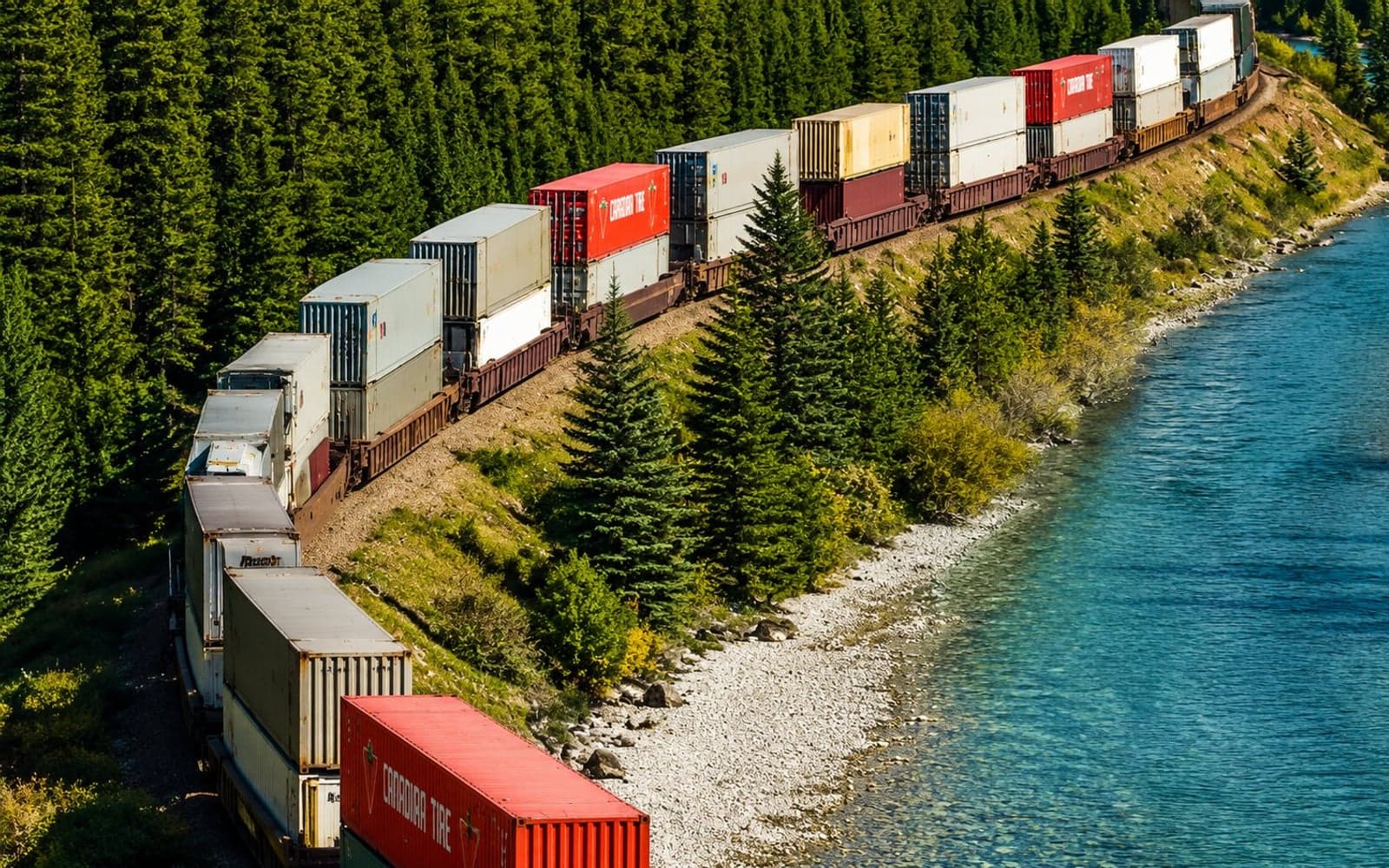
Intermodal means the container moves on more than one mode without being unpacked. A container is drayed to a rail ramp, loaded onto a railcar, hauled long-distance by train, then drayed by truck from the destination ramp to its final stop. The cargo stays in the same box the whole way.
Intermodal rail tends to fit when:
- The inland distance is long (think cross-country lanes).
- Cost matters more than shaving off a day or two.
- Volume is steady enough to plan around rail schedules.
- Fuel efficiency and capacity are priorities.
How over-the-road trucking works
OTR trucking moves the container (or transloaded cargo) directly by truck from origin to destination. It's the most direct option and the most flexible on timing.
Trucking tends to fit when:
- The distance is short to medium.
- You need door-to-door delivery without ramp hand-offs.
- The shipment is time-sensitive.
- Rail ramp access or scheduling is inconvenient for your lane.
The tradeoffs to weigh
Kept general — every lane is different:
- Transit time. Trucking is usually more direct; rail can add time for ramp handling and scheduling. We don't quote specific transit times here because they vary by lane and season.
- Cost. Rail often has an edge on long hauls; trucking is competitive on shorter ones.
- Reliability and flexibility. Trucking offers tighter scheduling control; rail offers capacity and efficiency at scale.
- Hand-offs. Rail involves drayage at both ends — more coordination points, which is exactly where a forwarder helps.
The Midwest angle
Minnesota and the broader Upper Midwest are landlocked, so inland legs are long and unavoidable. That's where the rail-vs-truck call really pays off. A cross-country import might come in via intermodal rail to a Midwest ramp, then truck the final stretch. An export might truck to a coastal port, or rail to it, depending on cost and cutoff timing.
Sometimes the smartest move is to transload near the port — shifting cargo onto domestic equipment — then run the long leg by rail or truck on the terms that suit your freight.
How Conveyco helps you decide
Conveyco coordinates both rail and intermodal and nationwide trucking and drayage. Because we run both, our recommendation isn't tied to one mode — we weigh transit time, cost, and reliability for your specific lane and tell you the tradeoff in plain terms. We also handle the drayage at both ends so the door-to-door experience stays seamless, with real-time tracking throughout.
Bottom line
Rail for long, cost-sensitive hauls; truck for short, time-sensitive, or door-to-door moves — and often a mix of both. For Midwest shippers especially, the inland leg is where real money is won or lost. Request a quote and we'll compare the options for your lane.