
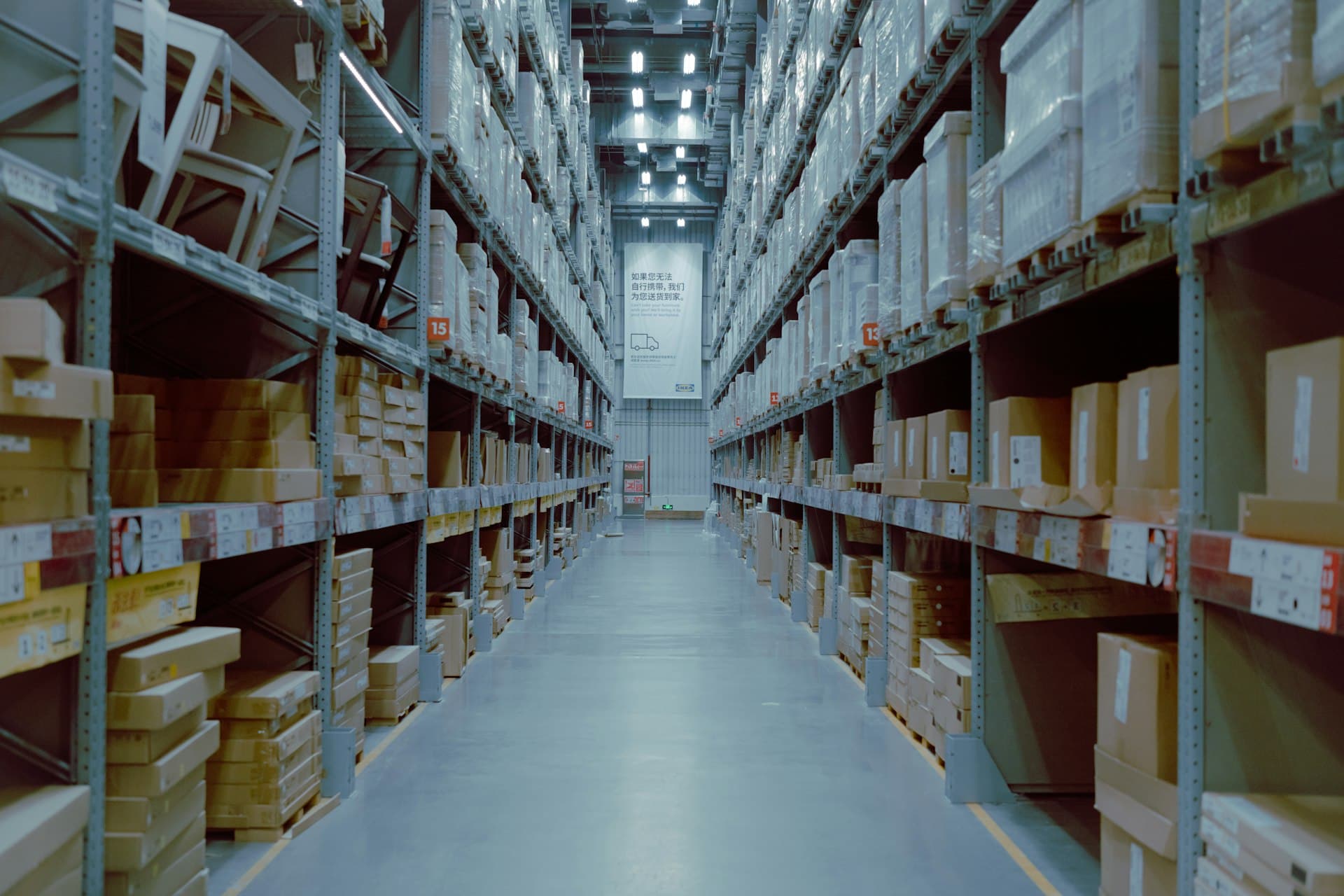
Photo by Lance Chang on Unsplash
Insights
Choosing a Freight Forwarder: 8 Questions to Ask Before You Sign
Choosing a freight forwarder is more like hiring an employee than buying a service. The same people handle all your shipments. The same relationship runs for years. Picking poorly costs you missed sailings, customs holds, late shipments, surprise charges, and stress.
Here are eight questions that filter out the providers who'll let you down before you commit.
1. Are you licensed — and where can I see proof?
In the U.S., freight forwarders and NVOCCs operating in ocean trade must be licensed by the Federal Maritime Commission (FMC). Customs brokers must be licensed by U.S. Customs and Border Protection. Forwarders handling air freight typically need IATA accreditation or equivalent.
A legitimate operator will tell you their FMC license number unprompted and can point you to the public FMC registry to verify. If they hedge or send you to "marketing materials," that's a flag.
For NVOCCs specifically, ask where their tariff is published — it must be publicly accessible by federal law. See our piece on what an NVOCC is for more on why this matters.
2. How long have you been operating?
There's nothing wrong with newer forwarders, but ocean freight is a relationship business — carrier relationships, broker relationships, terminal contacts. Operators with longer track records typically have deeper rolodexes.
Beyond company age, ask about the team. A forwarder founded last year by people who've been in the industry for 20 years is different from a forwarder founded last year by people who've been in the industry for 2 years.
3. What's your geographic specialty?
No forwarder is equally good at every route. Some specialize in Asia, others in Europe, others in Latin America. Some focus on coastal-port arrivals, others on landlocked Midwest customers. Some are excellent at LCL consolidations, others only do FCL.
Ask: "What trade lane do you handle most frequently?" If your shipments don't match their bread-and-butter routes, you might get pricing and service that reflects them learning your route, not running it efficiently.
4. What carriers do you actually work with?
A forwarder with relationships across multiple ocean carriers has flexibility. A forwarder tied to one carrier doesn't.
Ask: "If MSC's vessel schedule slips, who else can you book me on?" If they have a clean answer with two or three names, good. If they say "we'd have to look into options," less good.
For NVOCCs, ask about service contracts vs. spot pricing. Forwarders that move enough volume to hold direct service contracts with the carriers typically get better rates and priority space.
5. Who's my actual point of contact?
This is where small-to-mid-volume shippers often get burned by larger forwarders.
The sales pitch from a global forwarder typically features a senior salesperson. The execution — once you sign — flows through a call center or a junior coordinator handling 50+ accounts. Your "dedicated point of contact" may be technically dedicated but practically unreachable.
Ask: "Who specifically will be handling my shipments after onboarding? How do I reach them? What's the typical response time? What happens when they're on vacation?"
A good answer names a specific person, gives you their direct line or email, sets an expected response time (e.g., "1-2 business hours"), and explains the backup. A vague answer ("our team will be there for you") is a red flag.
6. How do you communicate?
Status updates can flow through:
- Email — most common, fine for routine updates
- A customer portal — rarer; usually better
- Phone calls — essential when things go wrong
- WhatsApp, Slack, etc. — some shippers expect this
Ask: "How do I see the status of my shipments? When my vessel is delayed, how do I find out? Is your portal real-time or batch-updated?"
Operators that have invested in genuinely real-time customer portals — showing actual container location, ETA, customs status — are signaling that they expect you to want visibility. Operators who say "we'll email you" are signaling that they expect you to wait.
7. What's your cargo insurance setup?
Ocean cargo can shift, ports can flood, ships can lose containers overboard. Insurance is the difference between an annoying loss and a catastrophic one.
Ask: "Do you offer cargo insurance directly, or do you refer to a marine underwriter? What's the standard coverage? How are claims processed?"
A forwarder who can write cargo insurance directly (or has a deep underwriter relationship) makes the claims process much simpler if something goes wrong. A forwarder who tells you to "get your own coverage" is leaving a known gap.
See our Cargo Insurance page for how this works at Conveyco — we offer carrier-agnostic marine cargo coverage on shipments we coordinate.
8. Can you give me references?
If a forwarder won't give you names of current customers in similar situations to yours — same volume, same trade lane, same shipper profile — wonder why.
Don't just ask for references. Actually call them. Ask:
- How long have you used them?
- What goes well?
- What doesn't?
- Have you had a real problem? How was it handled?
- Would you recommend them?
References are the part of the evaluation people most often skip. Don't.
The questions you don't have to ask
A few things you might be tempted to grill a forwarder on, but probably shouldn't:
Lowest price guarantees. Ocean freight rates move with the market. A forwarder who locks in pricing below market for a year typically does so by passing risk back to you in other ways — forced re-routings, equipment surcharges, demurrage exposure. Better to ask about transparent pricing and surcharge policies than absolute low prices.
Tech-stack questions. Whether your forwarder uses fancy AI tools matters far less than whether your forwarder picks up the phone when something's wrong.
Company size. Bigger isn't better. Mid-size forwarders often deliver better attention than giants, with deeper carrier relationships than startups.
What Conveyco offers
We're an NVOCC and freight forwarder operating from Burnsville, Minnesota. We've built the business around one principle: freight is a people business. The technology — this portal, the SLI form, the document tracking — exists to make routine things invisible, so we can focus on the calls that actually matter.
If you're evaluating freight forwarders and want to talk through what you're shipping, what your priorities are, and whether we're the right fit, request a quote or email Conveyco-Concierge@theconveyco.com. We'll be straightforward about whether we're the right NVOCC for your situation — sometimes we're not, and we'll tell you so.